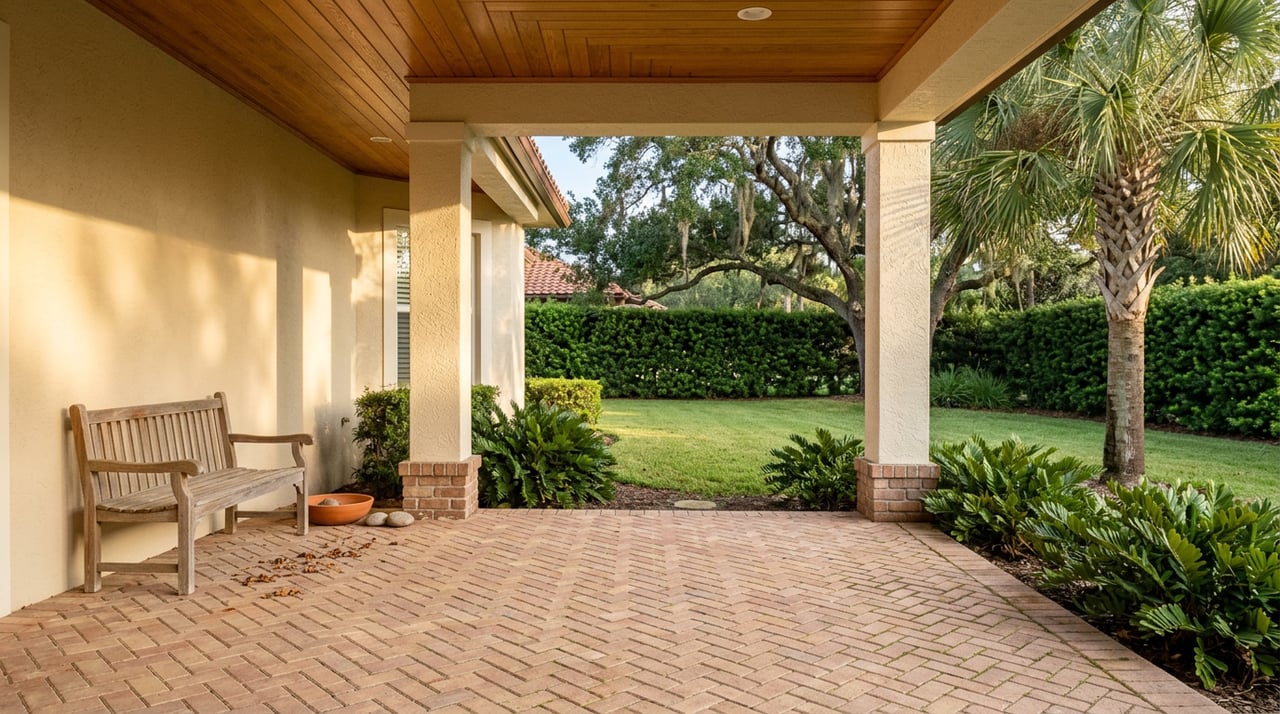
Two resale listings near University Parkway, both priced around $650,000, both close to 2,400 square feet, both photographed in the same late-afternoon light. On paper the decision comes down to floor plan and lot line. On the closing statement, it comes down to something the listing photos never show: which of Lakewood Ranch's villages the address sits inside, and how far along that village is in paying off the bonds that built it.
One of those two homes might carry an annual community assessment. The other might carry a different one, not because it is larger or newer, but because it sits inside a golf community where the assessment schedule bundles club costs into the same line item that would otherwise carry only road and stormwater debt. A buyer comparing Lakewood Ranch villages by list price alone is, without realizing it, comparing two different kinds of bills.
The District Behind the Line Item
Every property in Lakewood Ranch sits inside the Lakewood Ranch Stewardship District, a special-purpose unit of local government the Florida Legislature created in 2005 under Chapter 2005-338, governed by Chapter 189 of the Florida Statutes. The district's boundaries run past 25,000 acres across Manatee and Sarasota counties. The Lakewood Ranch Stewardship District FAQ guide describes the intent plainly: spread the cost of roads, stormwater systems, trails, and parks over as long as 30 years, so no single generation of buyers funds infrastructure meant to serve decades of residents after them.
That is not one flat, district-wide fee. Lakewood Ranch's build-out has been split into several separate component districts over time, each with its own bond, its own repayment schedule, and its own annual public hearing where the board adopts next year's assessment. One such hearing, held at Lakewood Ranch Town Hall in August 2025, set the schedule that appeared on the November 2025 Manatee County tax bill for that particular district. A different component district repeated the same cycle in 2026, adopting the schedule that will appear on the November 2026 tax bill instead. A separate filing in July 2026, tied to a routine audit request, put the Stewardship District's overall annual operating budget at roughly $15.3 million, not counting debt service.
That $15.3 million figure covers operations and maintenance across the whole district. It does not tell you what any single village owes. The debt service portion, tied to how recently that village's own bonds were issued, is where the real spread begins.
Bond Age Is the First Variable
The first reason two similarly priced Lakewood Ranch homes can carry different bills is simple math on a bond schedule. Villages that broke ground in the late 1990s and early 2000s, among them Country Club East, Central Park, and Greenbrook, have had two decades or more to pay down the debt that built their roads and lakes. In several of these older sections, the debt service portion of the assessment has been retired or paid down substantially, leaving mostly the operations and maintenance charge, the smaller and more stable of the two components.
Newer villages carry a different math. Waterside, Azario, and the Woodlands sector issued their bonds recently, at whatever rate prevailed when the district sold them, and those villages are still early in a repayment schedule. A buyer weighing a resale in Country Club East against a similarly priced new-construction home in Azario is not simply choosing between an established neighborhood and a newer one. They are choosing between a bond that is mostly behind it and one that has barely started.
Bundling Is the Second Variable, and It Does Not Move With Bond Age
Bond age explains part of the spread. It does not explain why assessment structures differ across villages if you assume every village charges by the same logic.
The gap comes from what is folded into that number. Lakewood National sits on 900 acres built around a 36-hole Arnold Palmer-designed course, with two clubhouses totaling more than 55,000 square feet between them. Golf here is bundled: the community's assessment structure carries the cost of maintaining that course and clubhouse network in the same annual line that would otherwise carry only road and stormwater debt. Calusa Country Club runs a similar bundled model around its own 18-hole and 12-hole courses, with published association fees running from $685 to $860 a month, well above what an unbundled village would ever charge for HOA dues alone.
Compare that to Lakewood Ranch Golf & Country Club, the four-course, 72-hole private club anchoring the original Country Club village. Membership there is optional rather than bundled into ownership. A buyer can purchase a home in Country Club East and never join a club at all, in which case the base association fee covers grounds maintenance, the neighborhood pool, and the ponds and lakes threaded through the village's twenty sections, and nothing more. Choosing to join instead is a separate decision, with tiers the club has published at roughly $6,000 to join and $185 a month for a Social membership, near $15,000 to join and $430 a month for Sports, and $110,000 to join and $1,360 a month for Premier Golf.
The two mechanisms do not travel together. A village can have an old, nearly retired bond and still carry a high assessment if its amenities are bundled. A village can have a brand-new bond and still carry a modest one if its HOA has no golf attached at all. Ranking villages by assessment size, without first checking what each number actually includes, tells you almost nothing about the real cost of ownership.
Even at the Top of the Market, Price and Bundling Move Independently
The pattern is not confined to entry-level villages. Over the three months ending June 2026, The Lake Club, the community's most exclusive gated enclave, posted a median sale price of about $2.6 million, down 12.6 percent from the same period a year earlier, with homes typically taking a little over two months to sell. The Lake Club's HOA includes its Grand Clubhouse, pools, and tennis and pickleball facilities. Golf is not part of that fee. Membership at the neighboring Lakewood Ranch Golf & Country Club remains a separate, optional purchase on top of an already substantial price tag.
A golf-bundled village priced at a fraction of The Lake Club's median can still carry a larger annual assessment relative to its purchase price, simply because one ownership model spreads golf and clubhouse costs across every owner's tax bill while the other keeps that decision, and that cost, entirely optional. Price tier tells a buyer what they are purchasing. It does not tell them whether golf came bundled with it.
What to Ask Before You Write an Offer
- Request the parcel's most recent Manatee or Sarasota County tax bill, not just the HOA disclosure. The Stewardship District assessment appears as a separate non-ad valorem line, distinct from the county's regular ad valorem tax.
- Ask directly whether the village's amenities, especially golf, are bundled into the assessment or handled through a separate optional membership. A single dollar figure means nothing until you know what it includes.
- Ask for the specific component district's most recently adopted budget. The operations and maintenance portion is reset every year through a public hearing, so last year's number is not a guarantee.
- Ask about the smaller master association fee layered on top of every village HOA, which typically adds a modest amount on top of what the village itself charges.
- If comparing new construction to resale, get the builder's CDD estimate in writing rather than relying on a verbal range, since early-phase villages can see costs shift once amenities open and staffing begins.
A Few Common Questions
Does a Lakewood Ranch assessment ever go away? The debt service portion retires once the underlying bonds are paid off. The operations and maintenance portion does not disappear. It is reset annually through a public budget hearing and continues for as long as the district exists.
Is the Stewardship District assessment the same thing as an HOA fee? No. The Stewardship District is a unit of local government, established by the state legislature, and its assessment is collected on the county property tax bill. The village-level HOA is a private association collecting separate dues for its own covenants and, in many villages, its own amenities.
Can a buyer negotiate related costs? What sometimes can be negotiated is responsibility for a related item, such as a bond payoff a seller has already started or a pending capital assessment, and that only surfaces if you ask for it during due diligence.
For a family weighing a resale in Country Club East against new construction in Azario, or comparing a bundled golf assessment in Lakewood National against an optional membership in the original Country Club, the honest starting point is the same document every time: the current tax bill for that specific parcel, read alongside the district's most recent budget. Roger Pettingell and the team at Pettingell Professionals walk Lakewood Ranch buyers through that comparison village by village, so the number on the listing sheet and the number on the closing statement tell the same story. Contact us to talk through what a specific address actually costs to hold, not just to buy.
This article is general information, not legal, tax or financial advice. Consult a qualified professional about your situation.