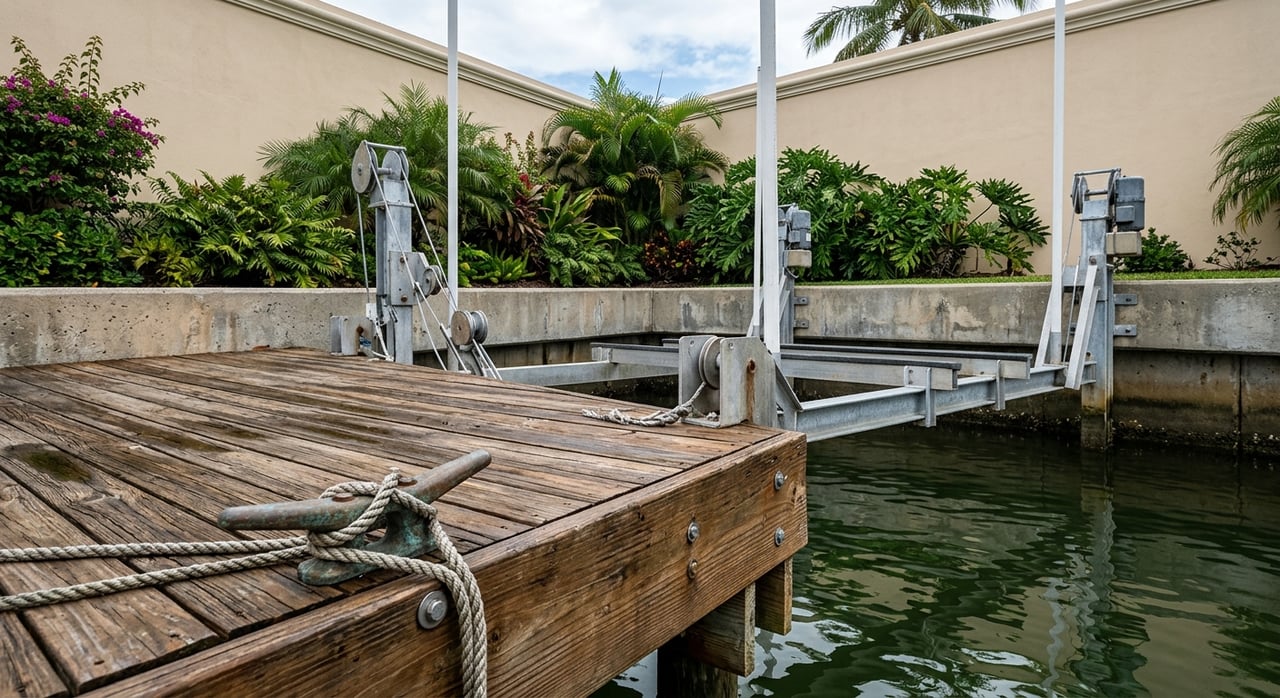
If you love boating, Bird Key can look like a dream at first glance. But when you look closer, not every lot works the same way for every boat, and that difference can shape your day-to-day lifestyle as much as the home itself. If you are weighing a purchase here, understanding lot types, canal access, and dock rules can help you make a more confident decision. Let's dive in.
Why Bird Key stands out
Bird Key is a fully developed island in Sarasota Bay with 511 homes across a 250-acre residential community, according to the Bird Key Homeowners Association. Its location between downtown Sarasota and St. Armands Circle gives you quick access to both city conveniences and waterfront recreation.
For boating buyers, the key point is simple: Bird Key is not one uniform waterfront offering. Local market guides and the HOA distinguish between bayfront homes, canal-front homes, and interior or garden homes, and each category supports a different boating experience.
How Bird Key lot types differ
Bayfront homes
Bayfront homes sit directly on open Sarasota Bay and are generally considered the island's most premium waterfront properties. Because of their open-water frontage, they are the Bird Key option most naturally aligned with larger sailboats and larger motor yachts.
That said, buyers should still verify the dock setup, water depth, and permitting path for any specific property. Even on bayfront lots, the details of the shoreline and dock design matter.
Sailboat canal lots
Local boating guides use the term sailboat canal for canal lots with fewer bridge-clearance concerns than more interior canal parcels. These lots are often the better fit when you want canal protection but still need practical access for a taller or deeper-draft boat.
One recent local guide notes that some of these parcels can support cruisers over 50 feet, with bridge clearance and air draft being major factors between the dock and open water. In practical terms, this is where lot-by-lot review becomes essential.
Garden canal lots
Garden canals are typically more interior canal parcels where you may gain more shelter, but access can become more limited. Bridge clearance, canal width, and dock footprint often play a larger role here than buyers expect.
The Bird Key HOA handbook states that dock and piling incursion into a canal may not extend more than 20% into canal width, using surveyed dimensions. That helps explain why these lots are often a better fit for smaller powerboats rather than larger vessels.
Interior garden lots
Interior or garden homes do not have direct water frontage or a private dock. They are often viewed as a more accessible entry point into the Bird Key market while still offering the island address and location.
For buyers who want the Bird Key lifestyle without maintaining a private dock, this can be an appealing option. In many cases, the Bird Key Yacht Club becomes part of that conversation because it offers boating, social, and recreational amenities, along with reciprocity benefits with other yacht clubs.
Matching the lot to your boat
The most important boating question on Bird Key is not simply whether a home is waterfront. It is whether the lot's water geometry matches the boat you own now and the one you may want later.
A bayfront lot may offer the easiest fit for a larger vessel. A sailboat canal lot may balance protection and access. A garden canal lot may work well for a smaller powerboat, especially where bridge clearance and canal width are tighter.
Before you move forward, it helps to evaluate a property through a practical lens:
- Boat length
- Draft
- Air draft
- Bridge clearance between the dock and open water
- Canal width
- Dock footprint potential
- Water depth at the dock
- Future vessel plans
That kind of review can keep you from buying a beautiful waterfront home that does not actually support the way you plan to use it.
Dock approval is a two-step process
On Bird Key, dock work is not just a city issue. It involves both HOA approval and City of Sarasota permitting.
The Bird Key HOA handbook says no dock, seawall, fence, roof, or similar exterior change may begin without prior written association approval. The City of Sarasota's permit materials also direct Bird Key applicants to include the HOA affidavit with the building permit application.
That layered approval process matters because the HOA handbook also notes that it is not a source for city requirements. In other words, HOA approval does not replace city review, and city permitting does not replace HOA approval.
City rules that matter to boaters
The City of Sarasota's dock checklist and zoning code set out several practical standards that boating buyers should know. These are not small details. They can shape whether a dock concept is realistic for a specific lot.
Key city standards include:
- On open waters of Sarasota Bay, docks must be designed to reach the required water depth
- A private residential dock may accommodate no more than three vessels
- The access dock is limited to six feet in width
- New docks or extensions in open waters require a signed and sealed bathymetric survey
- Permit drawings must show docks, lifts, cleaning tables, benches, lockers, and pilings
For a buyer, this means dockage is part real estate decision and part planning exercise. What looks possible from the backyard is not always what the permit path will allow.
HOA rules that affect canal lots
The HOA adds another layer of standards, especially for waterfront homes on canals. These rules are important because they directly affect how far a dock or pilings may extend into the water.
According to the HOA handbook:
- Docks and pilings may not extend within 15 feet of the extended side property boundary
- Docks and pilings may not project more than 20% into canal width
- Canal incursion is measured using actual surveyed dimensions taken perpendicular to the canal
- Dredging cannot begin until all applicable governmental permits are obtained
These requirements are a big reason lot geometry matters so much on Bird Key. Two homes may both be canal-front, but one may offer a much easier docking setup than the other.
Common mistakes boating buyers make
Treating all waterfront the same
Not all waterfront on Bird Key functions the same way. Bayfront, canal-front, and interior homes come with very different access, docking, and maintenance considerations.
Looking only at depth
Depth matters, but it is only part of the picture. Bridge clearance, canal width, and dock footprint can be just as important when you are evaluating whether a boat will work at a property.
Assuming yacht club access replaces private dockage
The Bird Key Yacht Club can support a boating lifestyle, but buyers should confirm membership details and any slip or dockage terms directly with the club. It should not be treated as an automatic substitute for private waterfront access.
Designing first and checking later
It is easy to get excited about improving a dock or reworking a shoreline. On Bird Key, that can be a mistake if you have not confirmed the HOA and city approval path first.
Why pre-offer diligence matters
Bird Key's inventory is fixed, and waterfront opportunities are highly specific. That makes pre-offer diligence especially important for serious boaters.
Before you write an offer, it is smart to understand how a lot functions in real life, not just how it photographs. A careful review of access, geometry, and dock constraints can help you avoid expensive surprises and choose a property that fits both your home goals and your boating plans.
When you are weighing Bird Key waterfront opportunities, local guidance can make the process far more efficient. For tailored insight on Bird Key lot types, boating fit, and waterfront positioning, connect with Pettingell Professionals.
FAQs
What types of lots are available on Bird Key for boaters?
Bird Key generally includes bayfront homes, canal-front homes, and interior or garden homes, and each type offers a different level of water access and dock potential.
What is the difference between a sailboat canal and a garden canal on Bird Key?
Sailboat canal is a local market term for canal lots with fewer bridge-clearance issues, while garden canals are typically more interior and often more limited by bridge clearance, canal width, and dock geometry.
Do Bird Key interior homes have private docks?
No. Interior or garden homes do not have direct water frontage or private docks.
What approvals are needed for a dock project on Bird Key?
Dock projects typically require prior written HOA approval and City of Sarasota permitting, and applicants are directed by the city to submit the HOA affidavit with the permit application.
How many boats can a private residential dock hold in Sarasota?
Under the City of Sarasota dock standards cited in the research, a private residential dock may accommodate no more than three vessels.
Why does canal width matter for Bird Key dockage?
Canal width matters because the HOA limits how far docks and pilings may project into a canal, using surveyed dimensions, which can affect what type of boat and dock layout a lot can reasonably support.